What are the benefits of music lessons for children?
Learning an instrument gives children far more than musical skill. Music lessons are widely associated with growing confidence, patience, focus and coordination, along with friendships and a healthy way to express emotion. At Narellan Music Centre, our supportive, local studio in Narellan helps children enjoy all of this, starting with a trial lesson.
Last updated: 19 June 2026
Parents often ask what their child will really gain from music lessons, beyond learning a few songs. The honest answer is quite a lot, and much of it lasts well beyond childhood. Whether your child is three or thirteen, our music lessons are built to grow these benefits at every stage.
Confidence and self-belief
Few things build a child's confidence like mastering something that once felt impossible. Working at a tricky passage, then finally playing it cleanly, teaches a child that effort pays off. Many parents notice their child standing a little taller, and our recitals give every student a friendly stage to feel proud on.
Discipline and patience
Music rewards steady, patient effort far more than quick wins. Sitting down to practise for a few minutes most days, even when progress feels slow, quietly builds discipline that carries over into schoolwork and sport. Because nobody learns an instrument overnight, children also learn that patience is a strength worth having.
Focus and memory
Reading music, keeping time and moving your hands all at once asks a lot of a young brain, and that is the point. Music is widely associated with stronger concentration and memory, because every lesson is gentle practice at holding attention. Teachers often see a child's focus stretch a little longer week by week.
Physical coordination
Playing an instrument is a surprisingly physical skill. Coordinating both hands, or hands and breath, while reading ahead develops fine motor control and a natural sense of rhythm. For younger children especially, this kind of coordinated movement is wonderful, playful exercise for growing bodies and minds.
Listening skills
Good musicians are, first and foremost, good listeners. Children learn to hear whether a note is in tune, whether they are in time, and how their part fits alongside others. That careful, active listening is a skill that reaches well beyond music, into conversations, classrooms and everyday life.
Social connection through ensembles and recitals
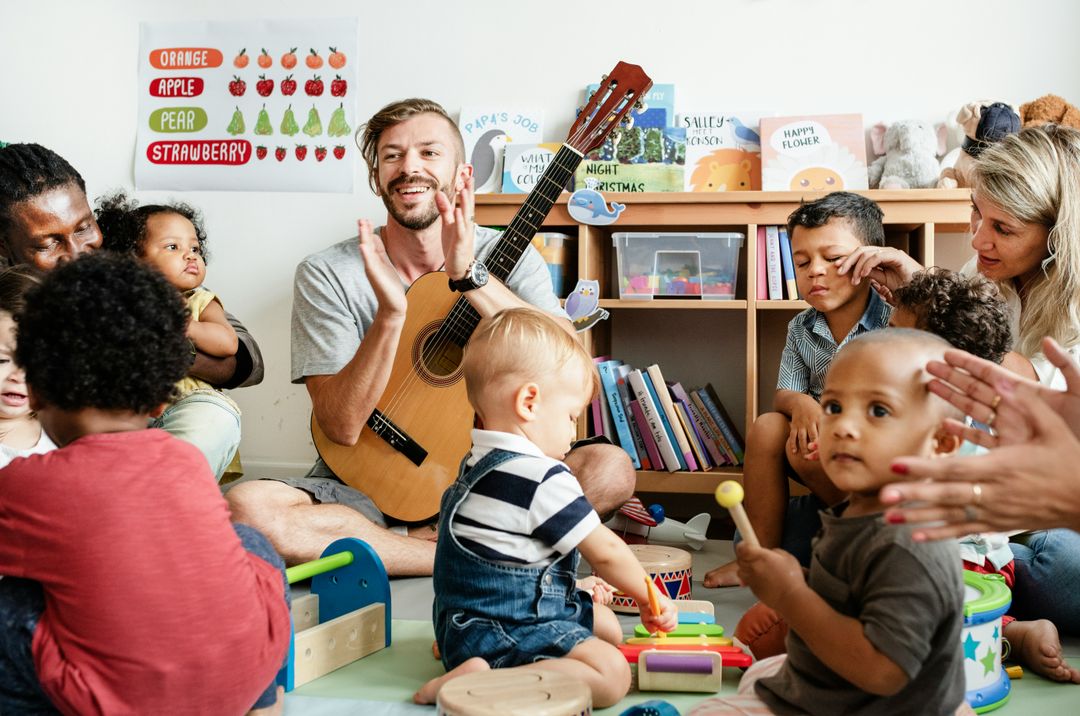
Music is a wonderful way to make friends. Playing alongside others, whether in a group lesson or at one of our recitals, teaches children to share, take turns and cheer each other on. Our recitals in particular bring families and students together and turn months of practice into a proud, shared celebration.
A healthy emotional outlet
Children do not always have the words for how they feel, and music gives them another language. Sitting down to play can be calming after a busy school day, a way to let off steam, or simply a happy half hour that is entirely their own. Many parents tell us it becomes a treasured part of the week.
Simple joy
Most importantly of all, making music is fun. The delight on a child's face when a song finally clicks is the whole point, and we never lose sight of it. A child who enjoys their lessons is a child who keeps playing, and keeps growing, for years to come.
Music lessons your child will look forward to
From the very first trial, our supportive, local studio helps children grow in confidence and skill. See what is on offer, or book a trial today.
Related questions
What age can children start music lessons?
Children can begin early. Our Mini Musos classes are designed for ages 3 to 5, and individual instrument lessons usually start from around age 5. Many of the benefits, like confidence and listening, grow at every age, so it is rarely too early or too late to start.
How soon will we notice the benefits?
Every child is different, so there is no fixed timeline. Many parents notice small changes within the first term, such as a little more focus, patience or pride after a lesson. The bigger benefits, like genuine confidence and skill, build steadily over months and years of enjoyable practice.
Does my child have to perform in recitals?
No. Our recitals are a warm, low-pressure way for children to share what they have learned, and most students love them, but they are always optional. Performing can be a lovely confidence boost when your child feels ready, and there is never any pressure to take part.
Which instrument gives a child the most benefit?
There is no single best instrument. The benefits come from regular, enjoyable practice, so the best choice is usually the one your child is most excited about. Children can learn piano, guitar, drums, singing and bass through our lessons, and we are happy to help you choose during a trial.
Give your child a head start
Book a trial lesson. Meet a teacher, try an instrument, and see the difference for yourself, with no pressure.